Top Web Design Trends in 2026: Website Inspiration to Watch

Top Web Design Trends in 2026: Website Inspiration to Watch
The 2026 web design trends smart brands should actually pay attention to
If you’ve been looking at the latest website design trends and wondering which ones are real shifts versus recycled Pinterest moodboards, you’re not alone. In 2026, good design feels less like decoration and more like decision-making, which is exactly why founders, hospitality brands, and creative teams need a clearer filter.
What are the top web design trends for 2026?
The short version is this: the best web design trends in 2026 are not just about making a site look current. They’re about building a faster, clearer, more human experience in a digital landscape shaped by AI, tighter attention spans, and higher expectations around accessibility and performance.
Trend roundups from Figma and Elementor point in a similar direction, with more emphasis on inclusive design, smarter interfaces, organic layouts, and performance-driven creativity than on flashy visuals for their own sake.
That matters because a modern web presence now has to do several jobs at once. It has to look visually appealing, support SEO, protect conversion rates, and make the website feel trustworthy within seconds.
For hospitality brands especially, trust and ease matter even more because travelers are comparing options quickly, often on mobile, and direct booking behavior is still a major commercial opportunity in 2026. SiteMinder’s 2026 reporting ties booking behavior closely to how clearly brands present value and reduce friction online.
Trend 1: AI becomes part of the interface, not just the workflow
Last year, a lot of teams used AI behind the scenes. In 2026, it’s moving closer to the user interface itself.
That doesn’t mean every homepage needs a chatbot waving at people like an overenthusiastic salesperson. It means websites are starting to use AI for smarter search, guided navigation, tailored recommendations, and better personalization, all without turning the experience into a gimmick.
Adobe’s 2026 digital trends reporting shows that generative and agentic AI are reshaping customer journeys, while current trend coverage from Elementor and Figma points to AI-powered assistance and intent-aware flows as one of the clearest shifts in design in 2026.
Here’s where things get interesting. For founders and operators, the real opportunity isn’t “adding AI” as a badge of innovation. It’s using it to remove hesitation.
A hospitality brand, for example, can use AI to surface the right room type, answer practical questions faster, or guide a user toward a direct inquiry without making them hunt through five web pages.
Used well, personalization supports a seamless user journey. Used badly, it becomes noise with a typing indicator.
Trend 2: Motion design gets more useful, and less show-offy
Animation is still one of the clearest trends to watch in 2026, but the tone has changed. The internet is finally calming down a bit.
Instead of giant cinematic intros that delay content, the better examples use motion design to explain hierarchy, signal feedback, and make user interaction feel intuitive.
Think softer transitions, scroll-based reveals that support the story, and micro-interactions that confirm a click, a hover, or a change in state.
That shift also lines up with how designers and developers are thinking about performance.
Google’s official guidance still centers core web signals like:
- LCP
- INP
- CLS
Good thresholds include:
- LCP: 2.5 seconds
- INP: 200 milliseconds or less
- CLS: 0.1 or less
In plain English, motion can improve overall user experience, but only if it doesn’t wreck load times or make the interface feel unstable.
Most businesses get this wrong by assuming more movement equals more premium. It usually doesn’t.
A polished Webflow website with restrained animation, clear pacing, and thoughtful motion design will almost always feel more expensive than a cutting-edge website that throws 3D elements, parallax, and looping effects at the screen just because it can.
If you want a practical rule, let animation explain the layout or reinforce the story. If it doesn’t do either, cut it.
Trend 3: Organic shapes and imperfect layouts make the web feel human again
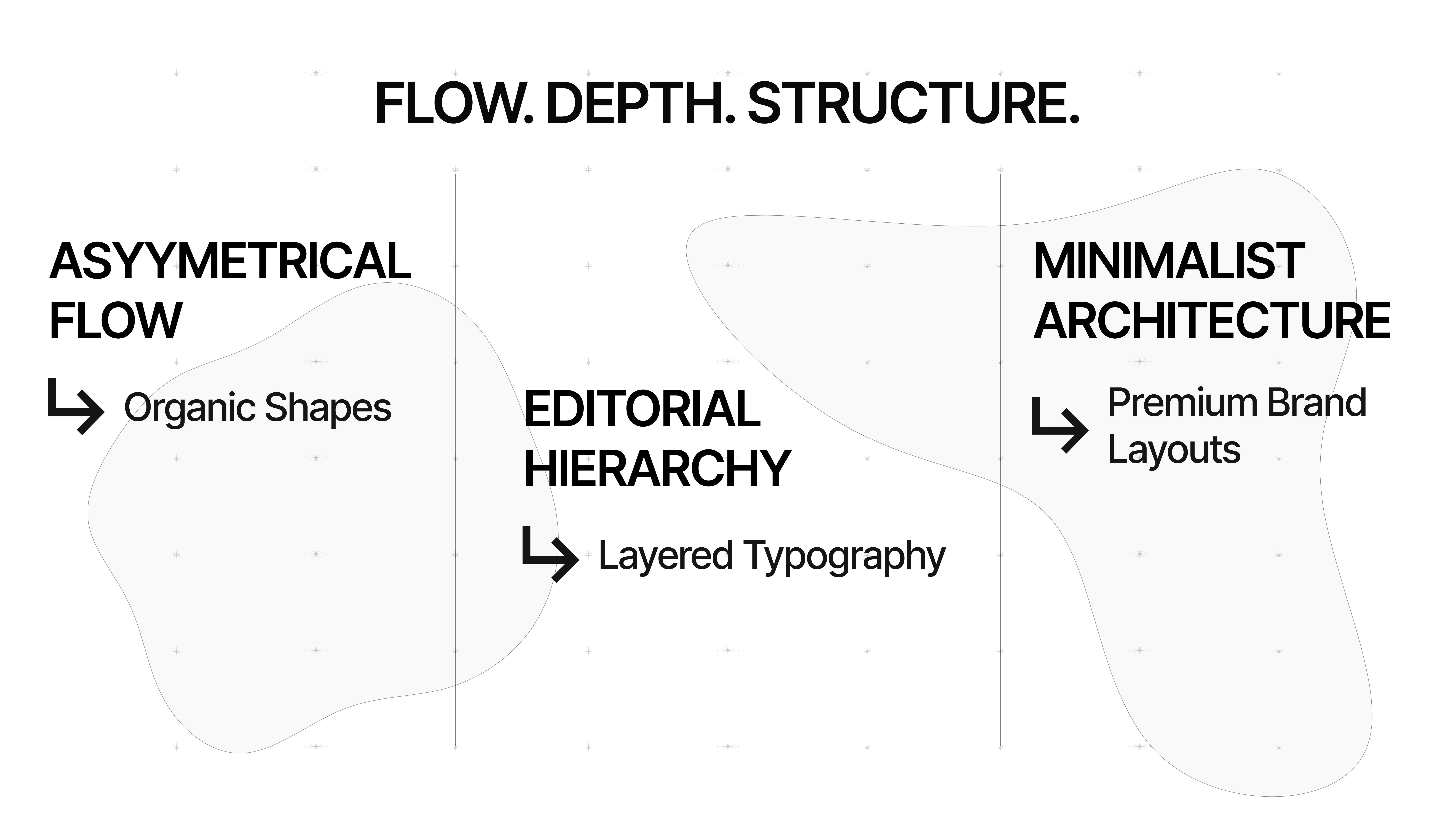
After years of rigid grids and over-sanitized SaaS minimalism, organic shapes are showing up everywhere in 2026 web design trends.
You’ll see:
- Softer composition
- Asymmetrical layout systems
- Tactile textures
- Layered typography
- Design elements that feel a little less machine-made
Adobe’s 2026 design trend coverage also points toward immersive, high-energy visual style with texture, surreal details, and stronger emotional character.
This doesn’t mean structure is gone. It means structure is less obvious.
The best version of this web design trend keeps the bones of responsive design and modern web design, then loosens the visual rhythm so the page feels alive.
For creative teams, this can add design inspiration without losing clarity. For hospitality brands, it’s especially useful because brand identity often depends on atmosphere.
A perfectly clinical layout might be clean, but it won’t always sell the feeling of a place.
There’s a small warning label here, though. “Organic” should not become an excuse for confusing navigation or decorative clutter.
White space still matters. Clear hierarchy still matters.
And if the website look becomes so artistic that users can’t find pricing, availability, or the next step, that’s not innovative web design. That’s just graphic design having a little identity crisis.
Trend 4: Accessibility is moving from compliance to creative standard
Accessibility is no longer the part of the project that gets mentioned in the last meeting, right after “we’ll also need alt text.”
WCAG 2.2 remains the current W3C standard, and it expands support in areas like navigation, target size, and predictable interaction, all of which matter for people with disabilities and for everyone else using the site under less-than-ideal conditions.
Figma’s current trend coverage also treats high contrast, keyboard-friendly flows, voice navigation, and screen reader support as increasingly standard, not niche extras.
That’s a healthy change, because accessibility tends to improve UX far beyond compliance.
Better contrast creates clearer reading. More forgiving tap targets help mobile users. Cleaner structure supports responsive web design and stronger SEO because content is easier to understand for both people and machines.
If your team still sees accessibility as something that limits creativity, I’d challenge that assumption. In practice, it usually improves the user experience and makes the work sharper.
For founders, this is one of the easiest design choices to get right early.
Bake it into design tools, prototypes, and content structure from day one. Don’t treat it like a patch.
The most modern web teams are doing the opposite now, and the result is a user interface that feels calmer, clearer, and more confident.
Trend 5: Performance becomes part of visual appeal
One of the best web design trends for 2026 is also the least glamorous to talk about in a brainstorm.
Speed.
Sustainable web design and sustainable design are moving closer to the center because users are less patient, search rankings still reward better page experience, and brands are finally realizing that website performance is part of the brand experience.
Google explicitly recommends achieving good Core Web Vitals as part of search success and user satisfaction, which means performance is not separate from web design and development anymore.
And this is where a lot of “beautiful” websites quietly fail.
Heavy videos, oversized assets, unnecessary scripts, and flashy transitions can drag down conversion rates before a creative team notices the problem.
In hospitality, that can be expensive. Travelers compare, bounce, reopen tabs, and make decisions fast.
If your booking flow lags or your hero section blocks the interface on mobile, the site isn’t being premium. It’s being rude.
The smarter direction is performance-first polish.
Use:
- Responsive media
- Cleaner code
- Lighter assets
- Selective interactive elements
- 3D elements only when they genuinely add value
This is what modern web design is evolving toward: not less ambition, just better judgment.
So which trends actually make sense for your brand?
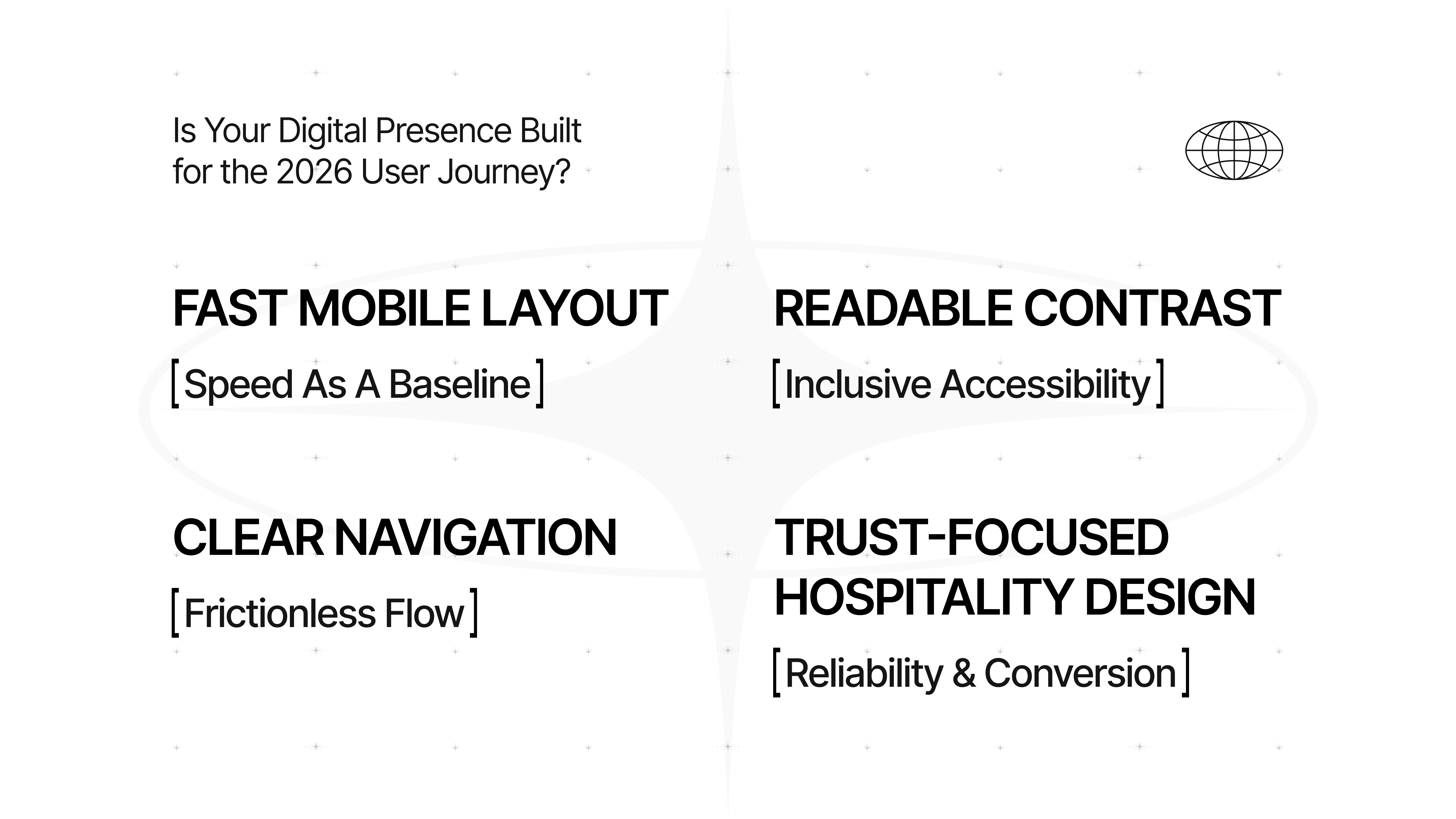
If you’re a founder, start with clarity, speed, and trust before you chase novelty.
Most founders think the problem is digital marketing when the real issue is that the site creates friction.
Better structure, cleaner UX, stronger SEO foundations, and helpful micro-interactions usually outperform trendy decoration.
If you’re in hospitality, focus on a responsive, trust-building interface that supports direct action.
That means:
- Clean navigation
- Visible offers
- Simple inquiry or booking paths
- A website that feels premium without being slow
If you’re a creative team, this is your permission slip to play a bit more with layout, organic shapes, motion, and visual systems, but only after the essentials are working.
Staying ahead of the curve is great. Making the website feel effortless is better.
A good design partner will usually make the same argument, even if it’s less fun to pitch.
The top priority is not copying every trend on the list. It’s deciding which trends like AI, animation, or a more minimalist visual system actually support your design needs, your audience, and your business model.
Final thoughts on web design trends in 2026
The top web design trends in 2026 are less about chasing novelty and more about building better web experiences.
The strongest websites right now combine AI where it helps, motion where it clarifies, organic visual systems where brand matters, accessibility where it should have always mattered, and performance everywhere.
That’s why the conversation has shifted.
The latest web design trends are not really about style alone. They’re about making the website feel useful, memorable, and easy to trust.
If you’re creating websites for real businesses, that balance matters more than ever.
It’s also the difference between a site that looks current for six months and one that still feels smart long after the trend cycle moves on.

FAQs
What are the top web design trends for 2026?
The strongest website design trends shaping 2026 are AI-assisted experiences, more intentional animation, organic and less rigid layouts, accessibility-first design, and performance-led execution. In other words, the trends aim to improve how a site works, not just how it looks.
Is AI replacing designers in web development?
No, and that idea gets repeated way too often. AI is becoming more useful in web development and content workflows, but the strategic work still comes from humans deciding what the site should say, how the interface should behave, and what kind of user experience actually supports the brand.
Are minimalist websites still relevant in 2026?
Yes, but minimalist design is evolving. The cleaner, more modern web approach still works, especially when it uses white space well, but many brands are mixing that simplicity with richer textures, warmer visual systems, and more expressive design elements.
How do web design trends affect SEO?
They affect seo when they change crawlability, speed, clarity, and engagement. A site with better structure, stronger accessibility, and faster performance usually gives search engines and users a clearer signal, which can support search rankings over time.
Do hospitality brands need different design principles than other businesses?
Usually, yes. Hospitality websites often need to communicate trust, atmosphere, and practical information at the same time, so the balance between visual appeal and usability matters even more. A beautiful site that slows down the path to inquiry or booking is rarely doing its job.
Should every brand use 3D elements and motion design?
Definitely not. 3D elements and motion design work best when they support the story, add visual appeal, or explain interaction. If they distract, slow the site, or clutter the user flow, they become a liability instead of an upgrade.
User Journey Mapping: A Beginner's Guide with Examples for Better User Experience
Learn how user journey mapping helps improve UX, reduce friction, align teams, and increase conversions with practical steps, examples, and key mapping elements.
Ecommerce ROAS: Optimize Ad Spending for 5x Conversion
Learn how to calculate, optimize, and improve ecommerce ROAS using better targeting, creative, landing pages, attribution, and profitability benchmarks.

Is Webflow Good for SEO? Guide & Tips
Is Webflow good for SEO? Explore Webflow SEO capabilities, best practices, & tips. Learn whether to use Webflow to rank higher in search results.
Share this Blog Article on Social Media
See you
at 8:00.
Laptop optional.
Swimsuit recommended.
Excuses not accepted.
Let’s innovate together!

