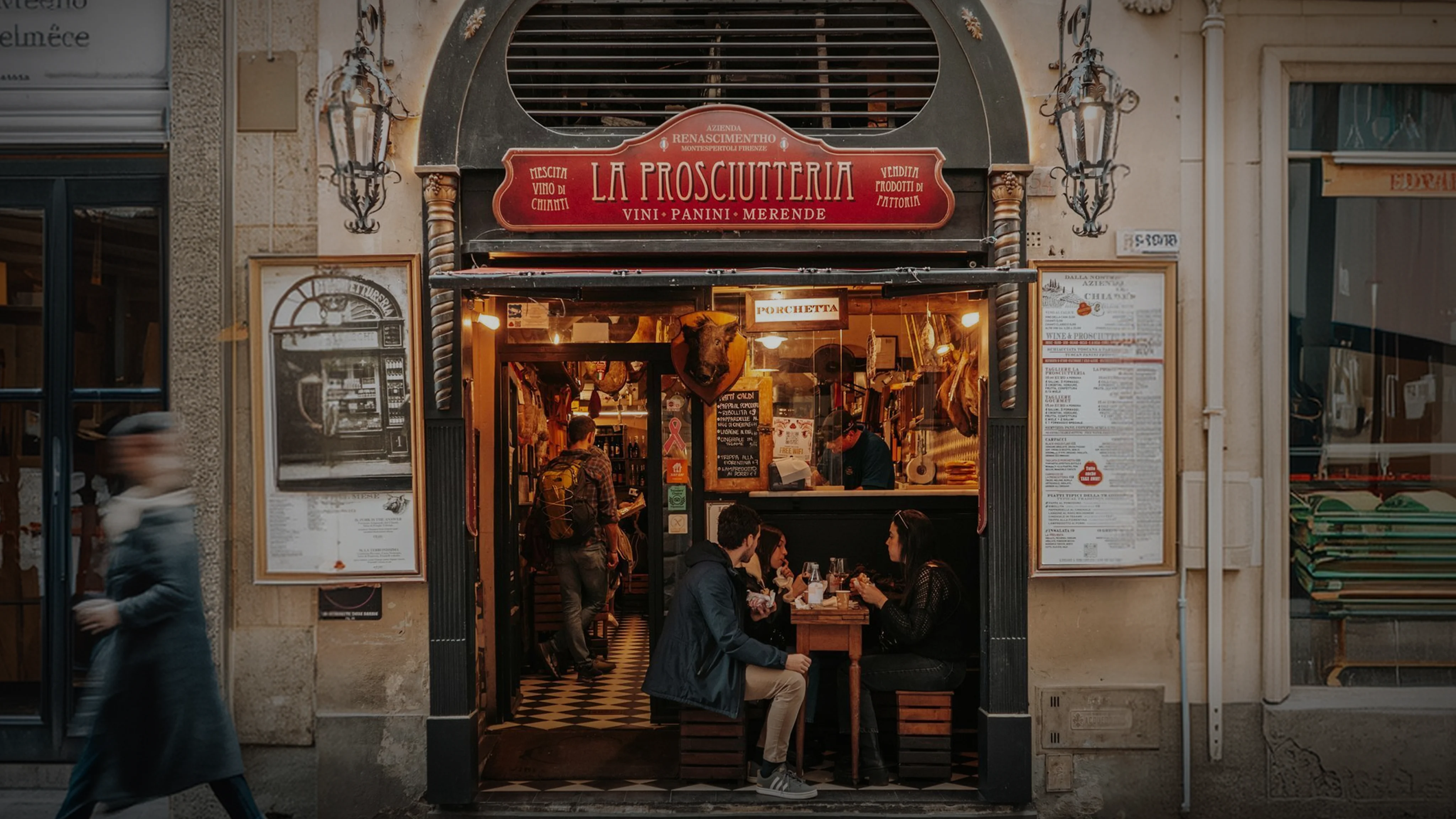
Four minutes to the best marketing in Florence
.jpg)
A sandwich, a wooden counter, and an ordinary conversation led me to a much bigger question about hype, brand experience, and why certain brands stay with us.
A few weeks ago, I was back in Tuscany, visiting Florence for the fourth time. And it gets me every time. The aesthetics, the architecture, the colors, the way the city lives, its relationship with food and rituals—all of it creates an energy that simply makes me feel good. Even the name Arno, the river that runs through the city, has always sounded good to me. A completely irrelevant fun fact, but it probably says enough about how emotionally invested I am in the whole package called Firenze.
Florence, among other things, really knows its sandwiches. More specifically, schiacciata farcita, Tuscan flatbread filled with mortadella, porchetta, cheeses, vegetables, pesto, truffles, and all those ingredients that have you planning your next meal before you’ve even finished the last one. In that world, one name has long been in a league of its own. All’Antico Vinaio started in Florence in 1991 and, over the years, became a global phenomenon, attracting enormous attention, countless reviews, and all sorts of unofficial titles for the best sandwiches. Social media has accelerated the whole story in recent years. Today, they have locations across Italy, in New York, and in other major cities, while the original street in Florence feels more like a small tourist attraction than somewhere you simply stop for lunch.
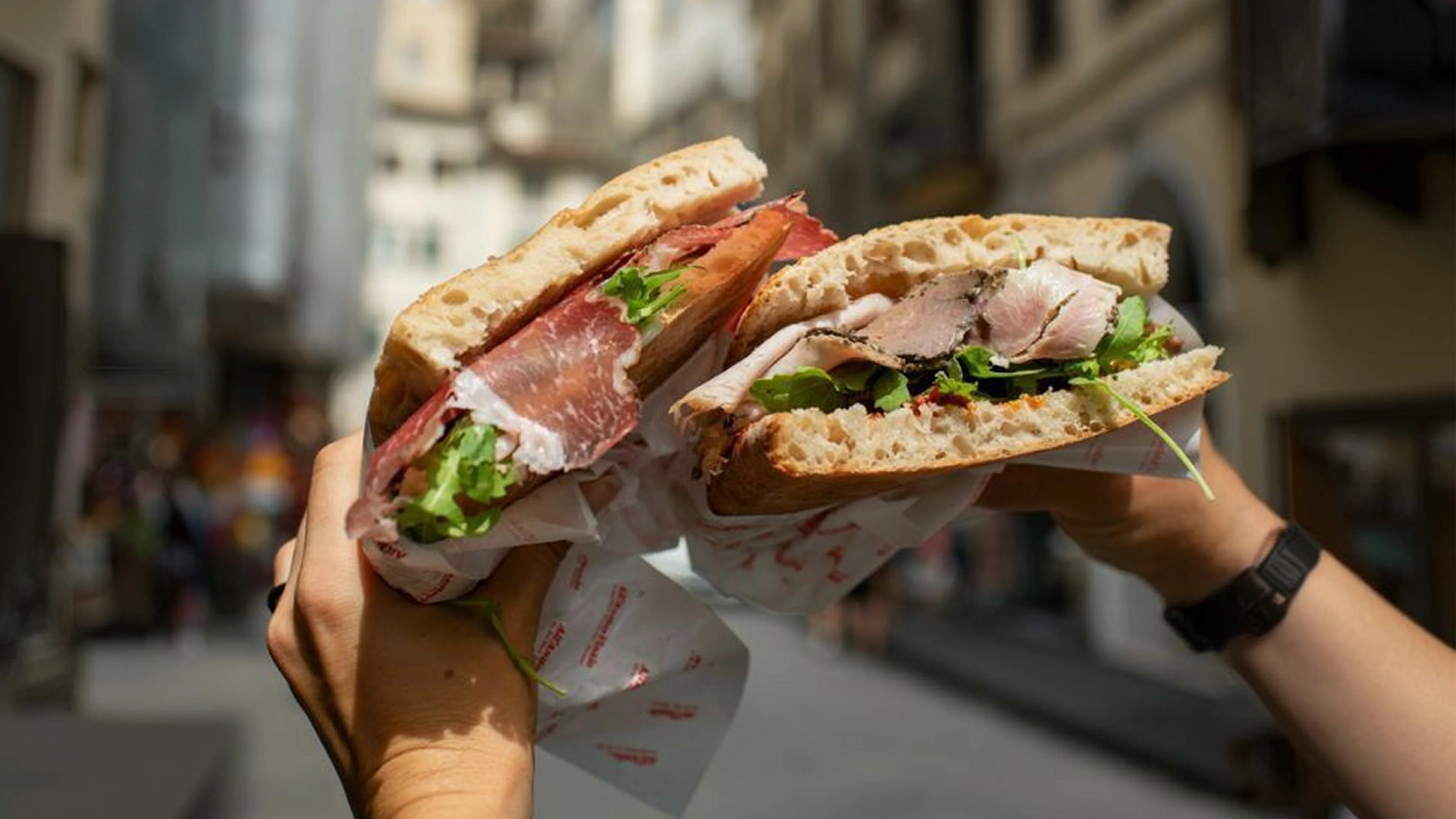
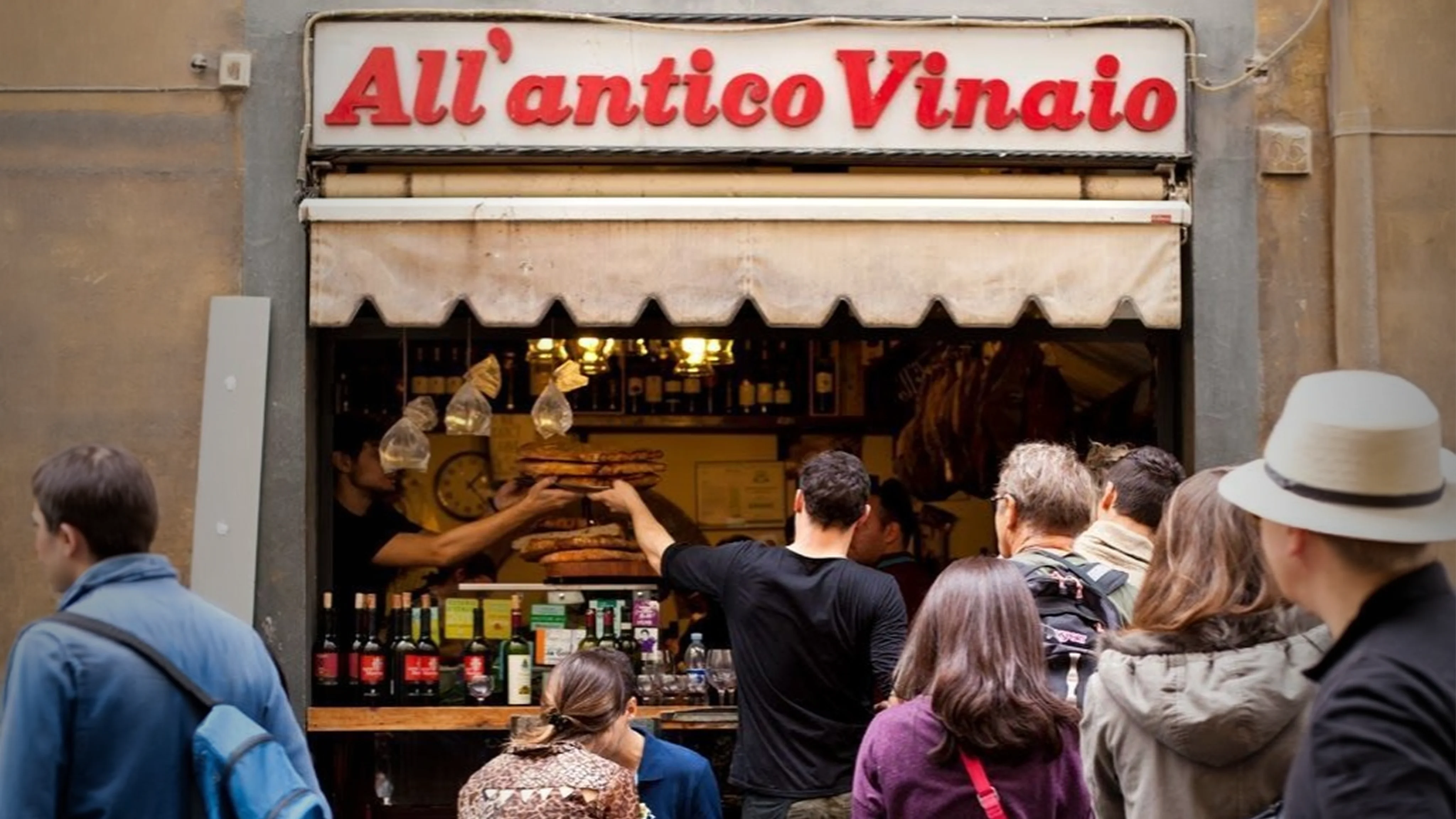
The queues are serious. So serious that they have people managing the crowds and keeping things running smoothly on the street. While you wait, a staff member occasionally walks past the queue carrying a stack of fresh bread. The smell drifts straight into a crowd that’s already spent twenty minutes thinking about nothing but food. Maybe it’s spontaneous, maybe it’s entirely strategic, but as a hospitality touch, it works perfectly. Your hunger instantly goes up a level.
I ate there several times during my short stay, and the schiacciata really is excellent. I understand the attention, I understand why people film it, I understand why someone wants to post that moment on Instagram and say they were there. The whole system is built to generate momentum, from the queue outside to the speed at which the sandwiches come out, the energy behind the counter, and the sheer volume of content guests create themselves every day.
Then I looked a few meters further down the street.
There are several other schiacciata shops on the same street. The same Tuscan bread, similar ingredients, the same city, practically the same location. Outside, it’s quiet. People walk past, someone occasionally steps inside, the owners stand in their shops, and the day moves at its own pace. That contrast immediately caught my attention. I started thinking about price, quality, visibility, branding, Instagram, social proof, the algorithm, hype, and everything else that shapes our attention today before we’ve even tried anything.
So on my last visit, I decided to walk into one of those schiacciata shops, practically next door to All’Antico Vinaio.
Inside, two older gentlemen, vintage Italian music, easy conversation, and the unhurried air of someone with all the time in the world that day. They seemed a little surprised I’d walked in, and that was exactly what I liked. We started with the usual “Where are you from?”, moved on to how I’d ended up in their shop, then to food, Italy, and my fairly serious relationship with anything involving basil. Ten minutes or so of completely ordinary conversation with people I’d never met before.
I asked one of them to make me whatever he would eat himself. He nodded, motioned for me to sit at the wooden counter, and told me to give him four minutes. We kept talking as he sliced the mortadella, layered the ingredients, and made a pesto whose aroma alone promised something special. I watched the process from a meter away, listening to his Italian-accented English, the music from the speakers, and the two of them trading remarks as they worked.
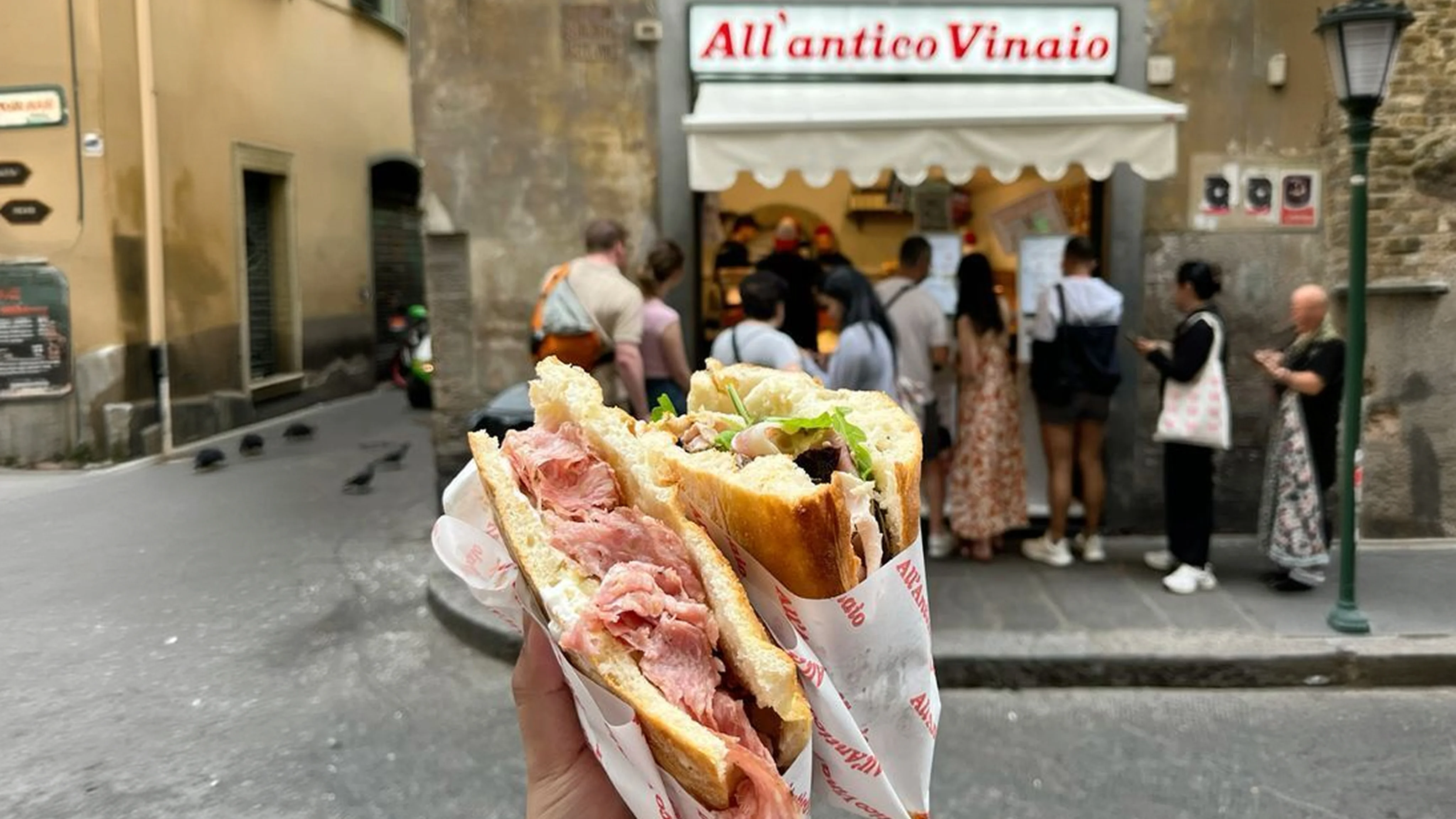
A few meters away, people were moving through the better-known shop almost like a supermarket checkout. Sandwich, phone, shot, next. A completely different energy, equally valid, just geared toward a different kind of experience.
Four minutes later, I was handed probably the best sandwich I’d ever eaten. Mortadella, truffles, homemade pesto, warm bread, a shirt stained with porchetta grease a few minutes later, and the kind of satisfaction that makes you smile while you eat. The flavor was incredible, and what turned it into a story was everything around it. The conversation. Watching the process. The aroma. The music. The wooden counter. The accent. The pace. The human touch.
That’s where branding begins for me.
The name of that shop has slipped my mind. So has the logo. I could find my way back without a problem
I remember where I sat. I remember the man who made my sandwich. I remember how he said “four minutes.” I remember the smell of pesto and truffles. I remember feeling that, for those ten minutes or so, I was actually part of the place, rather than just another person passing through. And that’s exactly why I’m writing about it today, why I’ll tell my friends about it, why I’ll go back next time, and why I’ll very likely leave a review. One ordinary conversation brought the shop a new guest, future repeat business, and a little free PR, all completely organically.
That’s where the whole story becomes much more interesting to me than the question of who makes the better schiacciata.
Marketing today measures attention with ease. Views, reach, the queue outside the door, followers, mentions, saves, reviews. These are all meaningful signals, and All’Antico Vinaio turns them into business impressively well. Their success is a great example of how a product, social proof, content, and momentum can come together to create a global hospitality phenomenon.
Experience, on the other hand, often lives in much quieter things. In the four minutes someone takes to make something for you. In being asked where you’re from. In the music playing while you wait. In seeing who’s slicing the mortadella you’re about to eat. In the feeling that a place has its own rhythm, and that, for a moment, you’ve stepped into it.
For me, that’s one of the most interesting layers of hospitality marketing. Sometimes, the most valuable touchpoint happens completely organically, between the person behind the counter and the person who’s just walked in off the street. That very moment later becomes a story, a recommendation, a memory, a return visit, and a reputation. Everything brands work to build every day.
And perhaps that’s exactly where the difference between attention and attachment lies. One brings someone to the door. The other brings them back.
As I walked through Florence later, I thought about how often we judge value by what already has the crowd’s approval. The queue tells us where to stand. Our phones tell us what to film. The number of reviews tells us what’s worth trying. All of it has its place. Then one small, human moment comes along and completely changes the scale by which you measure an experience.
Maybe that’s exactly why, for me, the best marketing that day was a man with a strong Italian accent who told me to sit down and give him four minutes.
And if we stripped away the queues, the algorithms, the follower counts, and all the noise around them, how would we actually choose where to spend our time and money? And more interestingly, whose marketing ultimately worked better in this story?

FAQs
What is hospitality marketing, and why is it important for restaurants and bars?
Hospitality marketing encompasses how a restaurant, bar, hotel, or other hospitality brand builds awareness, desire, and relationships with guests. It includes branding, social media, content, word of mouth, reviews, the atmosphere of a space, and the overall guest experience. It delivers the greatest value when marketing and the actual guest experience work together as one.
How does good restaurant branding influence the guest experience?
Restaurant branding shapes how a guest perceives a restaurant before, during, and after a visit. Visual identity, tone of voice, interior design, music, service style, staff behavior, and details within the space all work together to build brand perception. When these elements align, the experience becomes more distinct, memorable, and valuable.
Why is customer experience important in the hospitality industry?
Customer experience in the hospitality industry directly influences recommendations, loyalty, and repeat visits. Guests often remember a conversation, the atmosphere, a scent, the music, or how something was served just as vividly as the product itself. These details turn an ordinary visit into an experience that later generates word of mouth and organic marketing.
How does social media influence restaurant branding?
Social media has a major influence on restaurant branding because it shapes expectations before a visit. Photography, video content, reviews, user-generated content, and viral moments can quickly build popularity and social proof. The strongest hospitality brands use that attention to draw guests into an experience that lives up to what they’ve seen online.
What can small independent restaurants do better than large hospitality brands?
Small independent restaurants often have an advantage in direct interaction, flexibility, and personal relationships with guests. Direct communication, a visible food preparation process, local character, and an authentic atmosphere can create strong emotional branding without large marketing budgets. These are the experiences that often drive recommendations, reviews, and organic PR.
The White Tablecloth Dilemma
A simple hospitality decision revealed how small details shape expectations, influence behaviour and quietly decide who walks through the door.
Webflow Shopify Integration: How to Integrate Shopify with Webflow for a Better Ecommerce Experience
Connect your storefront: Integrate Shopify with Webflow to design unique ecommerce experiences. Build a headless Shopify store and customize the buy button.
.png)
Wix to Webflow Migration: How to Migrate from Wix to Webflow
Migrate from Wix to Webflow smoothly! Learn how to transfer your website from Wix, including your domain and SEO, to a new site on Webflow.
.png)
Share this Blog Article on Social Media
Let’s innovate together!